Skip to Study and Explore
Prometheus Mythos AN ATLAS OF THE IMAGINATION

I · THE GREEK WORLD

Worlds built
from stories.

Before there were maps of the world,
there were stories that gave it meaning.

From the first divine generations to the heights of Olympus. A world of gods, mortal ambition, and the fire that passes between them.

Theogony · The divine generations
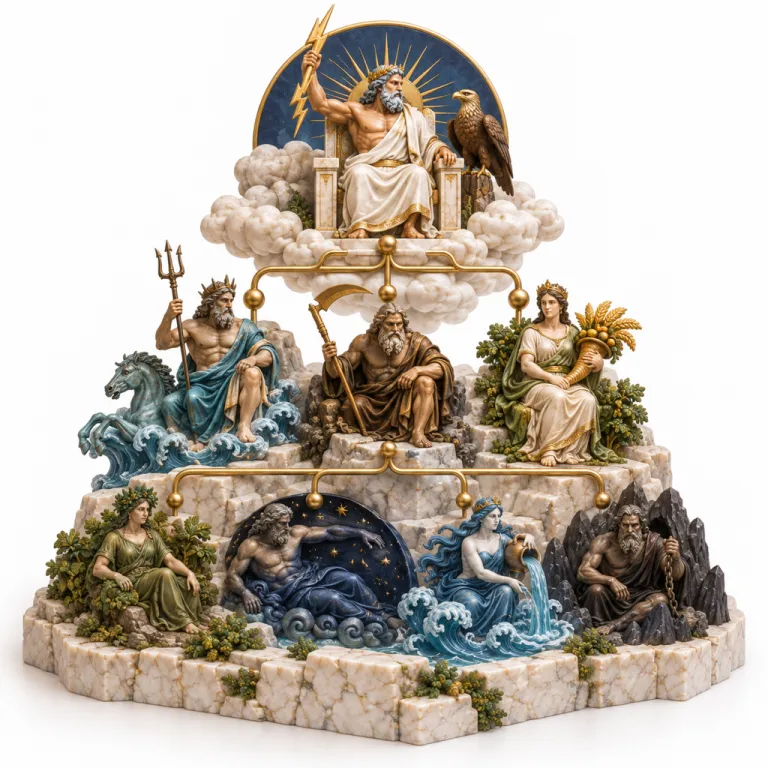
OLYMPUS · THE DIVINE WORLDA sculptural landscape of Greek divine generations, crowned by Zeus above Olympus.
THE EARTH, THE SEA, THE SKY

II · THE EGYPTIAN WORLD

Every dawn,
a return.

Across the sky. Through the underworld.
The sun’s journey begins again.

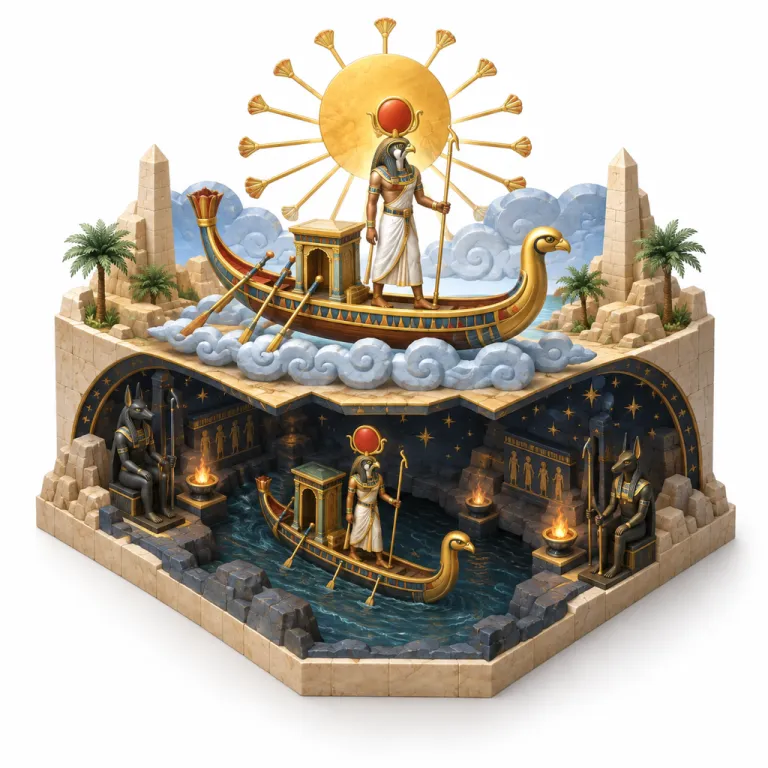
Ra crosses the heavens by day and the Duat by night. His passage makes renewal a daily struggle, and dawn a victory over darkness.

Ra · The solar voyage

THE SKY · THE SOLAR BARQUERa's solar boat above a cutaway night voyage through the Egyptian underworld.
THE DUAT · THE NIGHT JOURNEY

III · THE NORSE WORLD

All worlds.
One tree.

Roots in the depths.
Branches beyond the horizon.

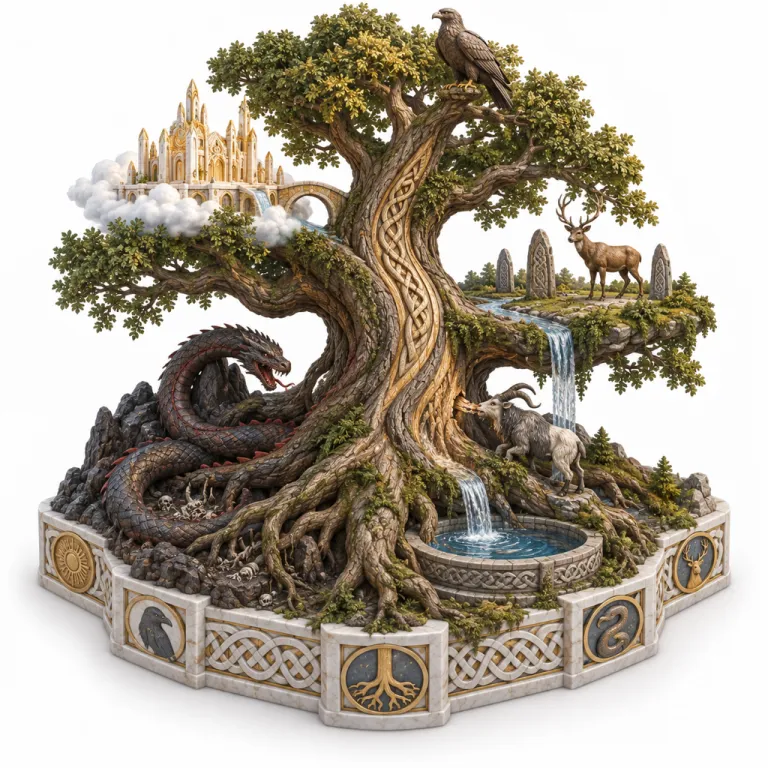
Yggdrasil holds the worlds together. Gods gather beneath it; an eagle watches from above; Níðhöggr gnaws at its roots. Even the cosmic tree endures threats.

Yggdrasil · The world tree

YGGDRASIL · THE WORLD TREEYggdrasil's branching worlds, with an eagle in its canopy and a serpent at its roots.
ROOTS REACHING INTO THE UNSEEN

IV · THE INDIC WORLD

A universe
revealed.

On a battlefield, a moment
opens onto the infinite.

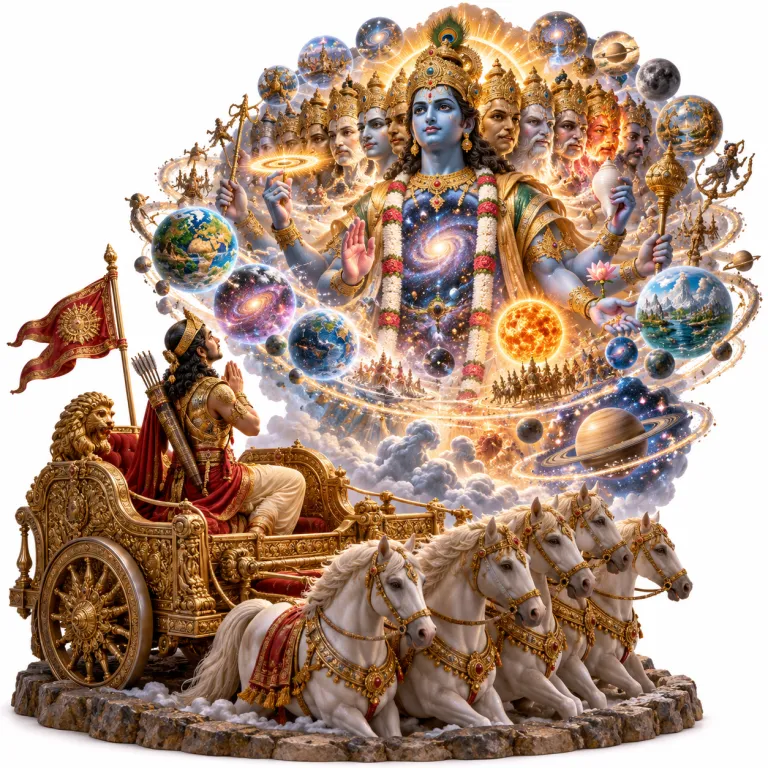
Arjuna asks to see Krishna’s cosmic form. In the Bhagavad Gita, the revelation contains gods, worlds, and time itself: a vision both wondrous and terrifying.

Bhagavad Gita 11 · The cosmic form

KURUKSHETRA · THE COSMIC VISIONArjuna's chariot before Krishna's radiant cosmic form, filled with many faces and worlds.
THE WORLD WITHIN THE DIVINE

V · THE MESOPOTAMIAN WORLD

What outlasts
a king?

Beyond the walls of Uruk,
a search for life without an end.

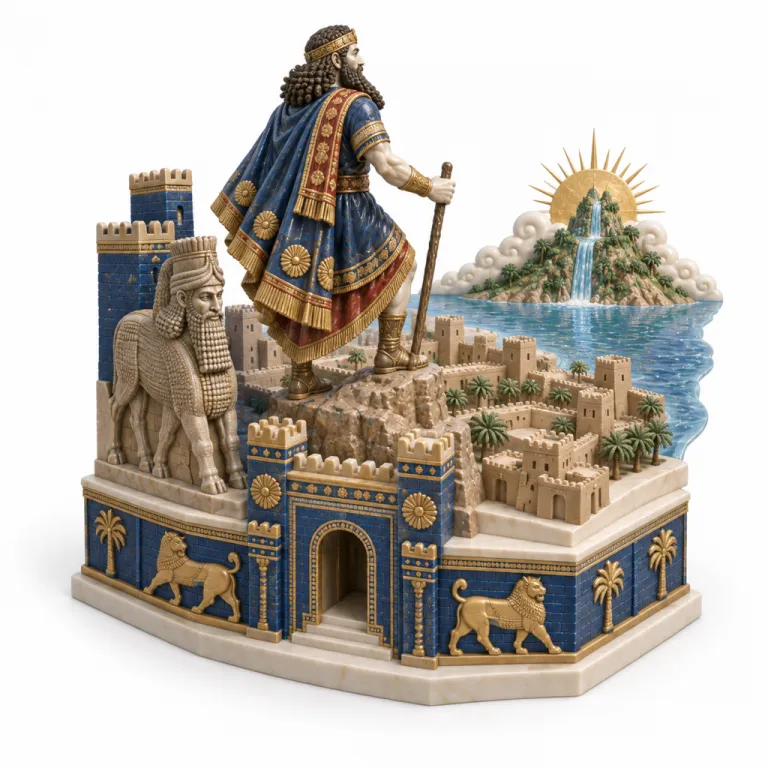
After Enkidu’s death, Gilgamesh seeks an escape from mortality. His journey brings him back to Uruk, to its walls, and to the things a human life can leave behind.

Gilgamesh · The king of Uruk

URUK · THE WALLED CITYGilgamesh above the blue and gold walls of Uruk, looking toward distant waters.
A CITY THAT OUTLASTS ITS KING

VI · CHINESE TRADITIONS

A sky
repaired.

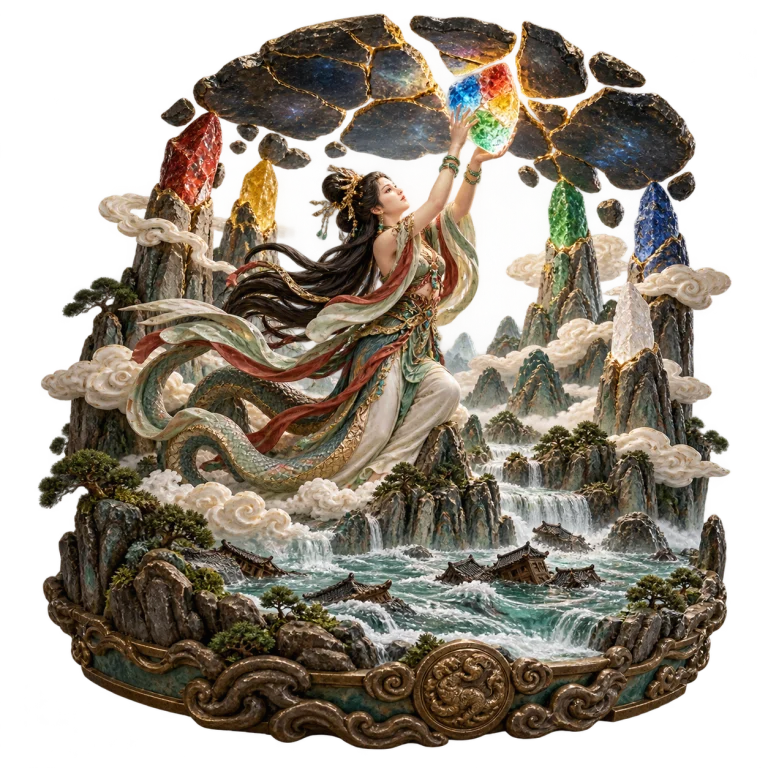
Nüwa

Nüwa repairs the damaged heavens in the Huainanzi by smelting five-colored stones and restoring the world's supports. Other traditions associate her with making humans, but these episodes are not all contained in the same early passage. She can appear beside Fuxi in later imagery and genealogy. Restoration, embodied creation, and paired cosmic order are related strands whose source histories should remain distinct.

Huainanzi, chapter 6, Nüwa's repair of the cosmos

Illustration for The sky's restorer
Chinese · Han textual traditions

VII · YORUBA TRADITIONS

A world
taking shape.

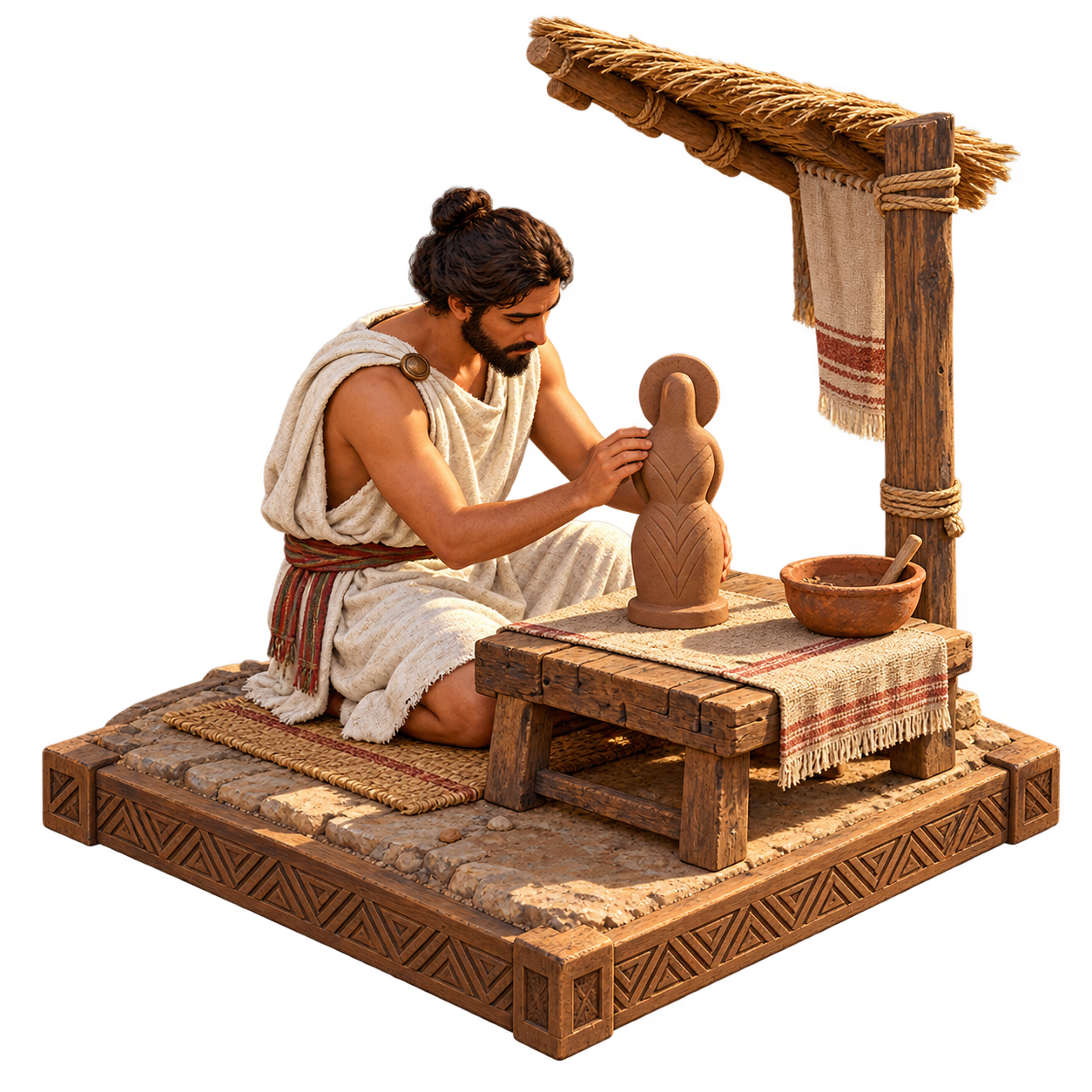
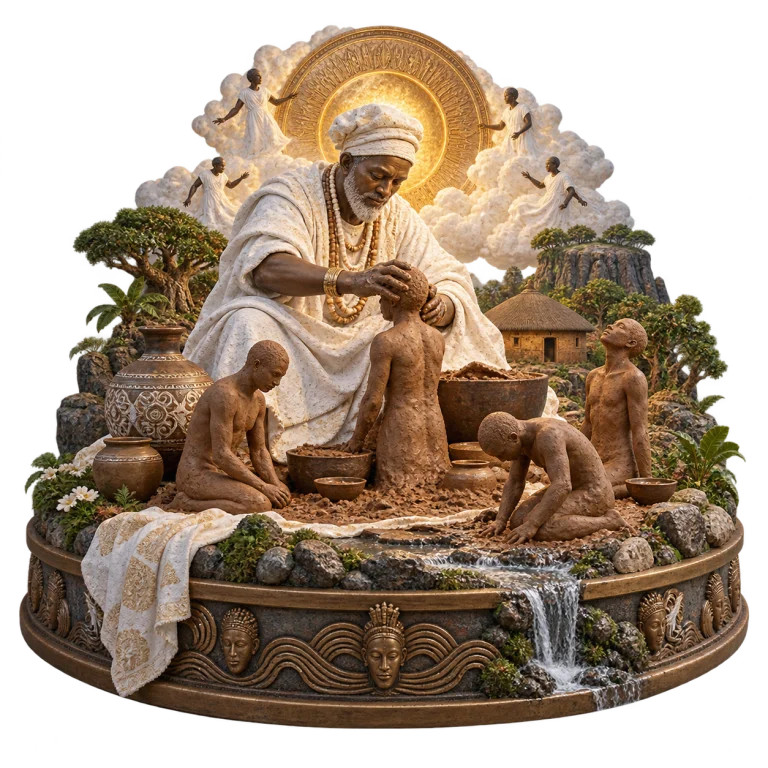
Ọbàtálá

Ọbàtálá is associated with forming human bodies, purity, and the significance of white cloth. Creation accounts distribute work among divine figures differently, and not every version assigns him the same sequence of tasks. His role concerns embodied persons and their care, not merely a craft metaphor. The profile distinguishes this forming responsibility from Odùduwà's prominent role in other accounts of land and founding authority.

E. Bolaji Idowu, Olódùmarè: God in Yoruba Belief, creation traditions

Illustration for The body's shaper
Yoruba · Ilé-Ifẹ̀ traditions

VIII · MESOAMERICAN TRADITIONS

Trials below.
Life renewed.

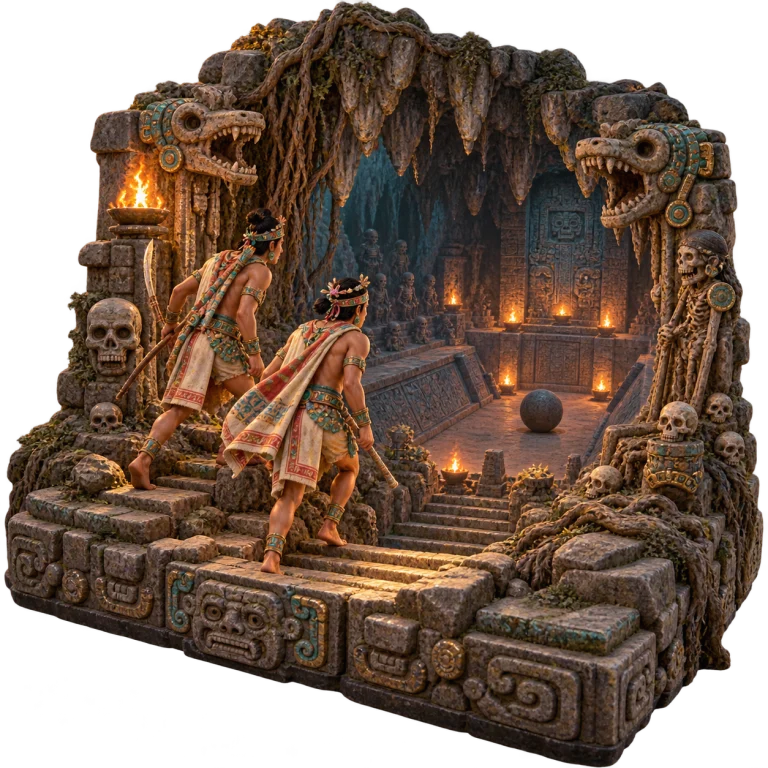
Hunahpu and Xbalanque

Hunahpu and Xbalanque confront dangerous beings and the rulers of Xibalba through intelligence, cooperation, and transformation. Their story belongs to a Kʼicheʼ Maya account, not a merged Maya-Mexica pantheon. Hunahpu and Xbalanque are the younger pair who overcome Xibalba's rulers. Their cooperation and cunning overcome dangers that defeated their predecessors. The surviving Popol Vuh narrative is Kʼicheʼ, despite wider Maya comparative evidence. Paired imagery requires evidence beyond resemblance to establish identities and episodes.

Popol Vuh, Hero Twins cycle, trans. Allen J. Christenson

Illustration for The younger heroes
Kʼicheʼ Maya · Popol Vuh

IX · ANDEAN TRADITIONS

Across the heights,
beginnings.

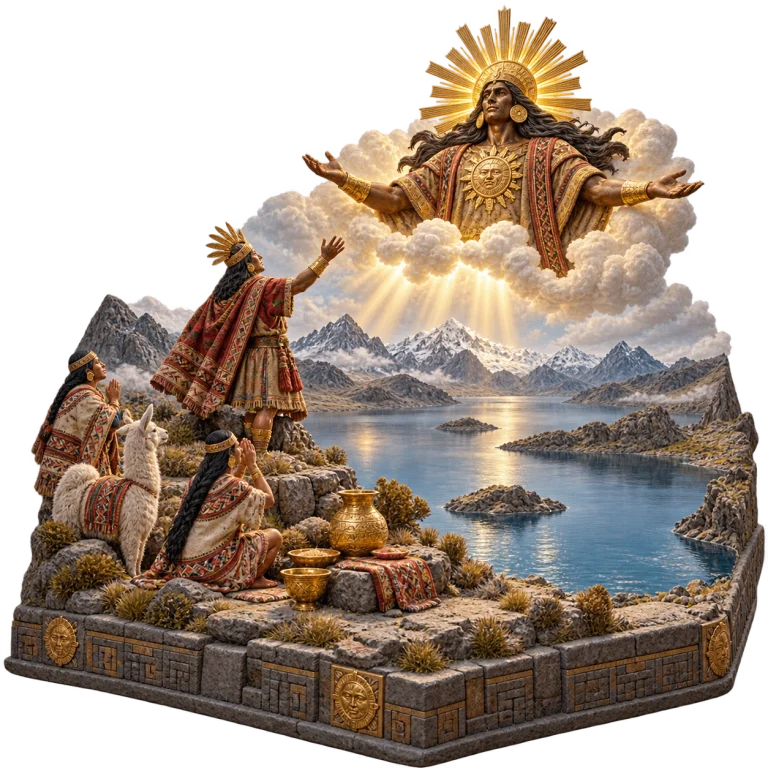
Viracocha

Viracocha is a creator figure in several colonial accounts of Andean and Inca traditions. Narratives associate his activity with the highland lake region, the formation of peoples, and journeys across the landscape. Chroniclers arrange and interpret these accounts differently. His creative authority should therefore be tied to a named testimony rather than presented as a single unchanged belief held by every Andean community.

Pedro Sarmiento de Gamboa, History of the Incas, creation account

Illustration for The highland creator
Inca traditions · colonial witnesses

X · POLYNESIAN TRADITIONS

Islands rise.
Stories travel.

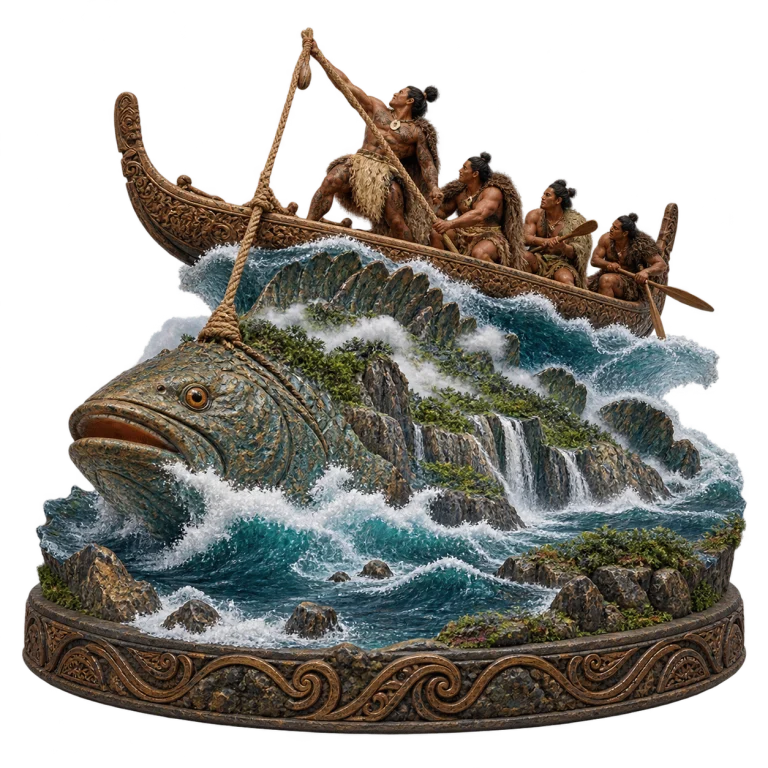
Māui Fishes Up Te Ika-a-Māui

Māui's fishing raises a great fish that becomes land in a Māori account. His brothers' premature cutting helps explain its rough surface. Te Ika-a-Māui identifies the North Island in this tradition. The jawbone gives the hook an ancestral relationship. Premature cutting creates an uneven landscape in this version. Regional identifications differ and need attribution. The collection draws on Māori knowledge while mediating its presentation.

Māori Māui fishing accounts; George Grey, Polynesian Mythology, 1855, with attribution limits

Illustration for The fished-up land
Māori · Māui traditions

XI · ISLAMIC TRADITIONS

Words, signs,
and wonder.

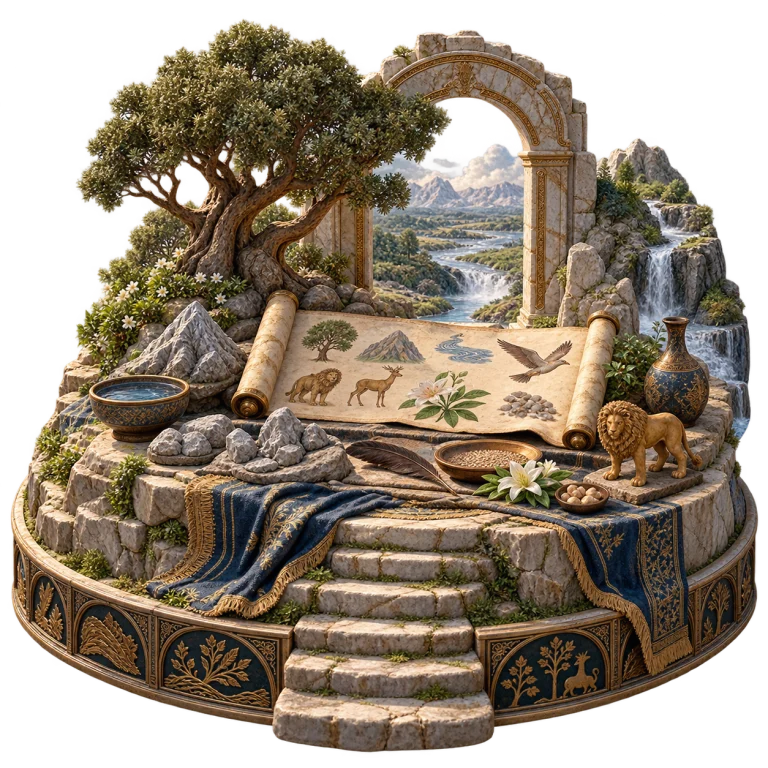
Adam Names the Creatures

The passage makes Adam's knowledge central to the exchange with the angels. It does not give a list of the names, so later explanations should be identified as interpretation. God teaches Adam the names and asks the angels to respond. Iblis refuses the command to bow, contrasting his fiery origin with Adam's clay. The garden account describes a prohibited tree, temptation and repentance, without naming the tree's botanical species. Human beginnings therefore involve knowledge and responsibility as well as material formation; later identifications require their own attribution.

The Project Gutenberg eBook of The Koran (Al-Qur'an), by — 2:30–33

Illustration for Adam and the names
Qur'anic narratives

XII · CHRISTIAN TRADITIONS

Creation, promise,
and renewal.

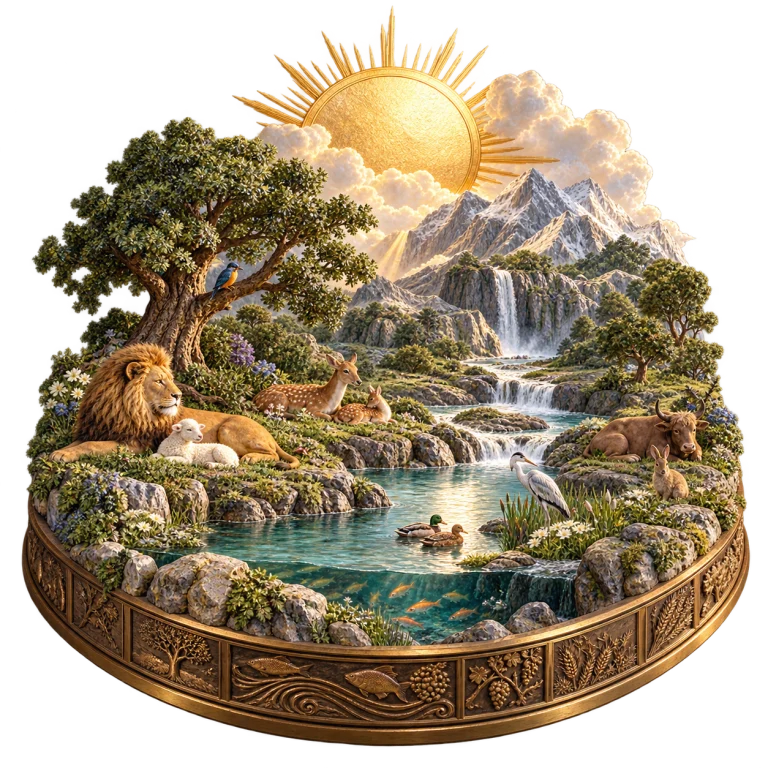
The Seventh Day

The seventh day completes the creation sequence through rest and blessing. This text belongs to the Hebrew scriptures and is also received as part of the Christian Old Testament. Genesis orders the world through creation and rest, then presents human life through earth, breath and a troubled relationship with the garden's prohibition. Cain's mark, Noah's dove and the rainbow covenant belong to subsequent episodes of violence and renewed possibility. Babel and Jacob's dream introduce different encounters with language and passage. Later familiar visual choices should remain distinguishable from what each biblical passage actually names.

The King James Bible | Project Gutenberg — Genesis 2:1–3

Illustration for Creation's seventh day
Hebrew scriptures received in Christianity

XIII · SLAVIC TRADITIONS

At the threshold
of the unseen.

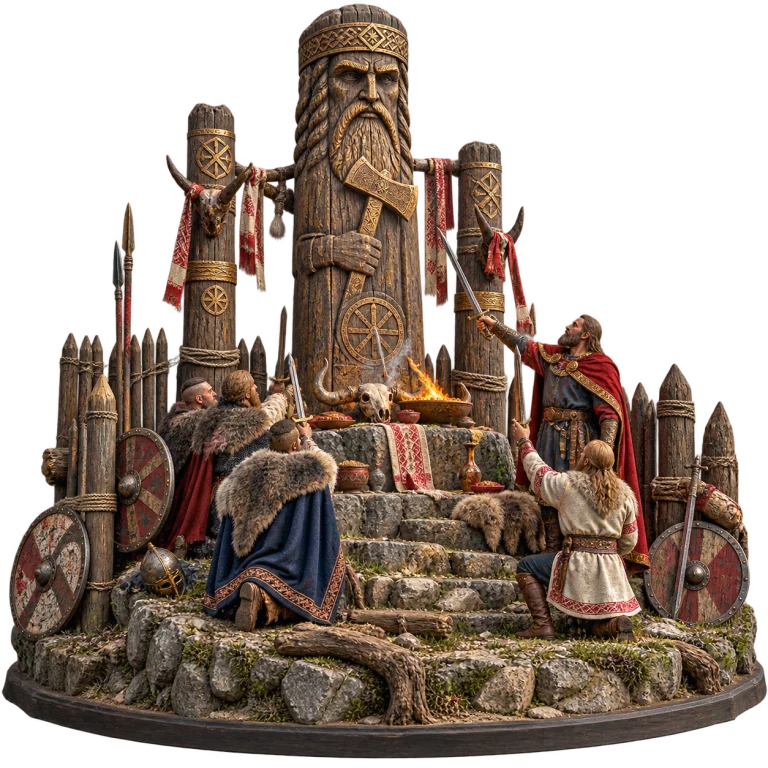
Perun

Perun is a major East Slavic deity associated with thunder and with political oaths in the Primary Chronicle. The account of Vladimir's idols makes his prominence especially visible. These medieval testimonies are limited and written from a Christian perspective. A profile can describe attested authority and cult without inventing a complete surviving epic or treating every reconstructed conflict with Veles as directly recorded ancient narrative.

Perun - Wikipedia — Sources; Primary Chronicle notices

Illustration for Perun's domain
East Slavic and Polabian records

XIV · JAPANESE TRADITIONS

Many kami.
Many voices.

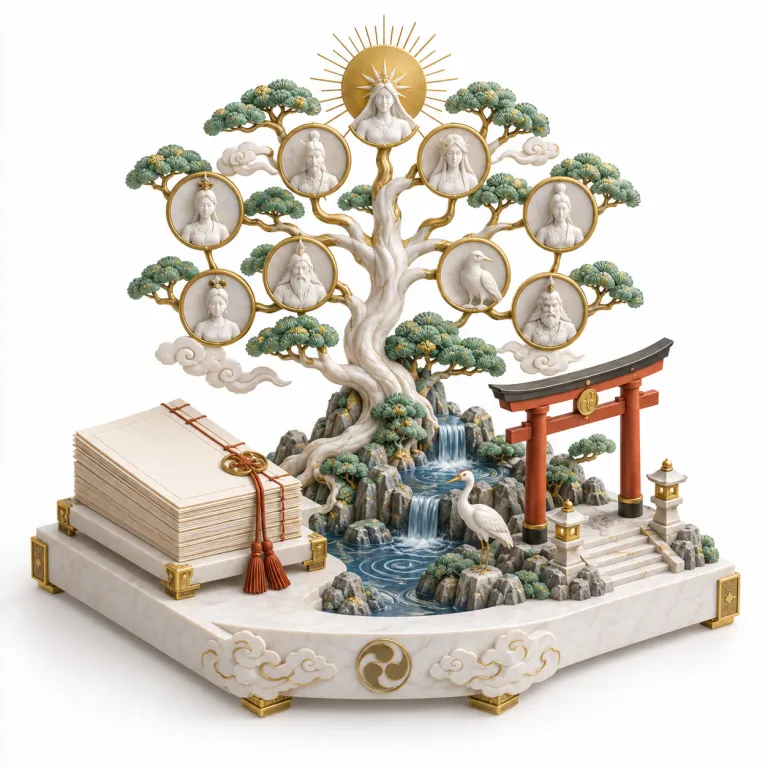
Kojiki

The Kojiki brings together accounts of the kami, royal genealogies and songs. Its preface describes the work of transmission and compilation, placing remembered narratives within a courtly project. The divine age supplies relationships and events through which later descent is explained. A story recorded here belongs to this compilation's arrangement; it should not automatically stand for every Japanese telling of the same episode. The Kojiki arranges divine narratives and royal descent within a courtly compilation completed in 712.

Kojiki, Preface and Book I

Illustration for Kojiki
Japanese · source-specific traditions
Scroll to travel
Fourteen traditions. Many ways to see the world.
Skip to your journey

WELCOME TO MYTHOS

The stories are ancient.
Your journey is yours.

Meet the gods. Follow the stories. See the connections.
Find your own way into fourteen extraordinary traditions.